Moor and Fell
Onto the Kinder plateau before first light
The plateau is easy ground in daylight and a maze of peat channels in the dark. Route choice, timing from the car park, and where the edge actually gives you a foreground.
Published 27 July 2026 Kinder Scout, Derbyshire Field entry
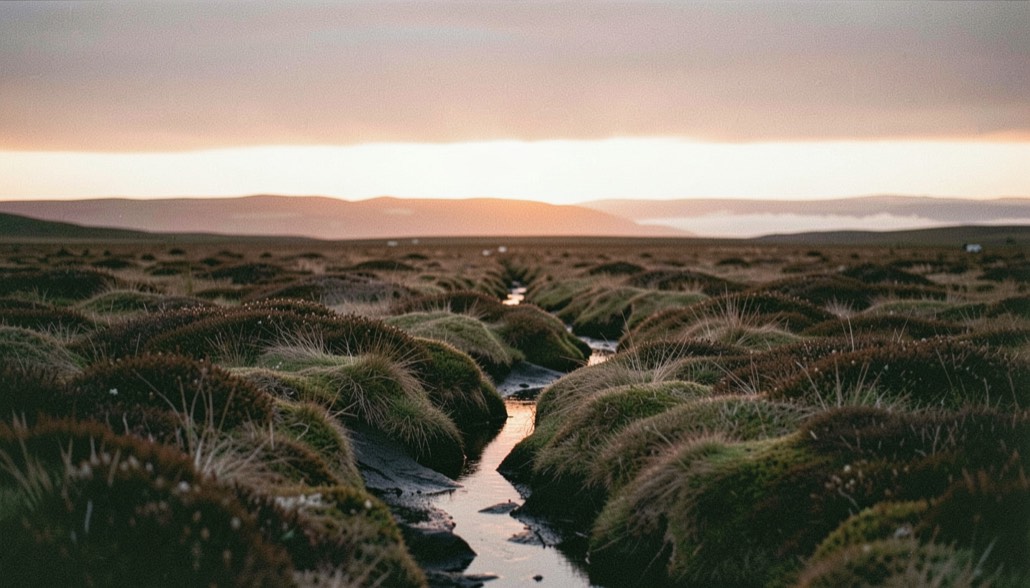
Kinder Scout is the high ground of the Dark Peak, a broad plateau reaching 636 metres, and it is not a summit in any useful sense. There is no top to stand on. What there is instead is a rim of gritstone edges around a raised bog, and the photography is nearly all done on that rim, looking outward or along it, in the half hour either side of sunrise. Getting there in the dark is the whole exercise, and it is more of an exercise than the modest height suggests.
Two routes out of Edale, and they are not equivalent
From the car park at Edale there are two obvious ways up. Grindsbrook Clough goes straight at the plateau, follows the stream into a steepening ravine and finishes with a scramble over boulders onto the rim. It is the shorter line and the better one in daylight. In the dark, with a headtorch and a bag, that final boulder section is slow, wet gritstone is genuinely slippery, and the route through it is not obvious from below.
The alternative goes west up the valley to Upper Booth and climbs by Jacob's Ladder, an engineered path with stone pitching most of the way, joining the plateau near Edale Cross and Kinder Low. It is longer and duller and it is the right choice before dawn, because you can walk it at a steady pace without stopping to work out where the path went.
For timing, reckon on the thick end of an hour and a half from the car park to the rim by the western route, with something over four hundred metres of ascent, and add a quarter of an hour for doing it in the dark. Then add another twenty minutes for the walk along the rim to wherever you have decided to be, and twenty more for setting up without hurrying. Working backwards from sunrise, that is a departure from the car well over two hours before the sun appears, and in June that means leaving in the middle of the night.
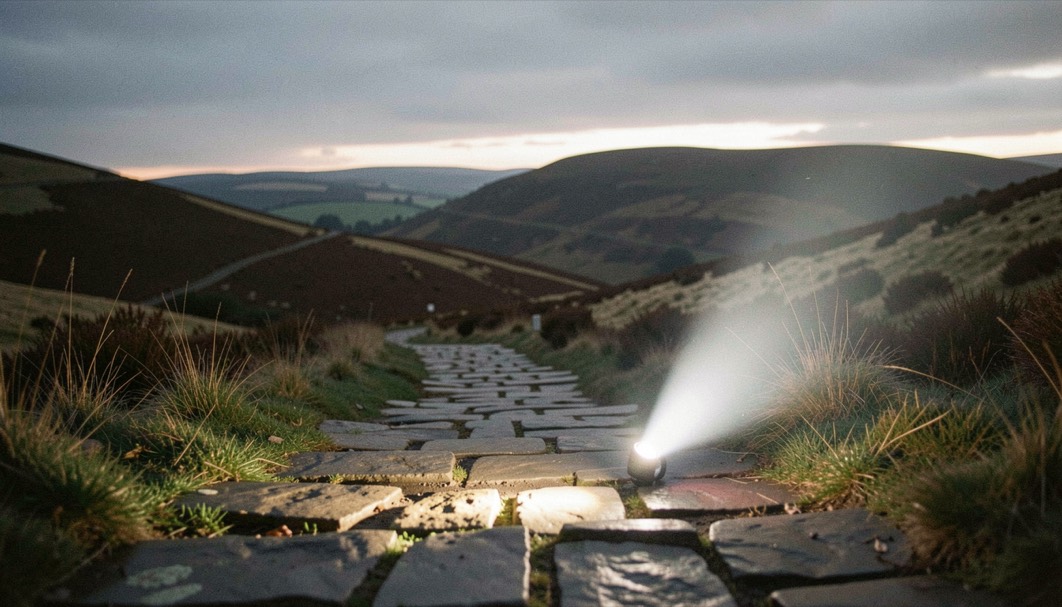
Why the plateau itself is difficult ground
Once you are up, the surface is blanket peat cut by groughs, the drainage channels that run through it, some of them well over head height. Between them stand the hags, isolated islands of peat with heather and cotton grass on top. In clear daylight this is slow but harmless. In the dark, or in cloud, it is one of the most disorienting pieces of ground in England, because every grough looks like every other grough and they curve, so following one takes you somewhere you did not intend to go.
The navigation answer is to stay off the interior altogether before daylight. The rim path is continuous, it has the drop on one side to tell you which way you are facing, and it passes everything worth photographing. If a frame requires being out in the middle, walk in from the edge after it is light and count your groughs going in so that you can count them coming back.
It is also worth knowing what the black channels are. Kinder's peat has been eroding for well over a century, from industrial pollution, burning, overgrazing and fire, and much of the bare ground you photograph is damage rather than nature. There has been sustained restoration work up there for years, gully blocking and sphagnum planting, and in places the bare peat is greening over. The picture of black groughs under a pink sky is a real picture of a real place, and it is also a picture of a wound.
On the ground
Peat holds water like a sponge and gives no warning of depth. Step on vegetation rather than on bare black surfaces, and if the ground is trembling underfoot, spread your weight and go back the way you came. A tripod leg planted in wet peat will keep sinking for as long as the exposure lasts, which is dealt with in the entry on levelling on soft ground.
There is no shelter on the plateau, no phone signal you can rely on, and the wind is usually two categories stronger than it was in Edale. Carry more layers than the forecast justifies and put them on before you are cold, not after, because you will be standing still for an hour.
Where the edge gives you a foreground
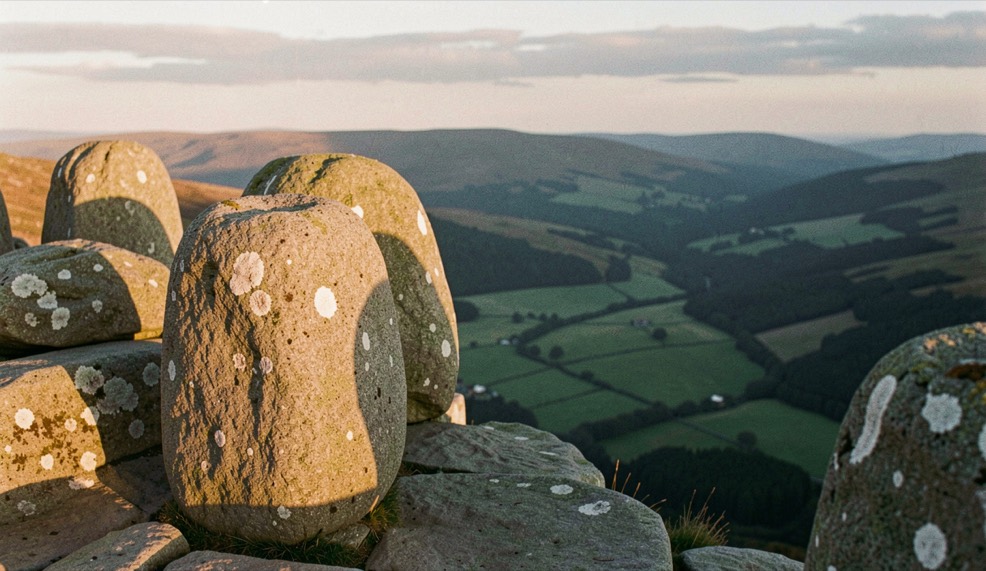
The photographic value of Kinder is concentrated in a handful of places where the gritstone comes to the rim and there is something in front of the drop. Along the southern edge the weathered blocks of the Woolpacks stand clear of the moor in rounded, wind carved forms; the ground near Crowden Tower gives a foreground of stacked slabs with the whole of the Vale of Edale below. On the eastern side, above Grindsbrook, the outcrops at Ringing Roger face directly into the sunrise, which in high summer comes up well to the north of east and lights the edge from along its length rather than head on.
Kinder Downfall is the other fixture, on the western rim, where the stream leaves the plateau. In a strong westerly the falling water is blown back up over the lip in a plume that can be seen from the valley, which is a genuine and reliable phenomenon rather than a rare one; it needs a decent flow after rain and a wind with real weight in it, which usually means autumn and winter rather than a settled summer morning.
The thing to avoid is the temptation to photograph the plateau flat. Without the rim, without an edge or a stack of gritstone in the near frame, the moor is a brown field seen at an angle. Everything depends on having something with an edge to it within a few metres of the camera.
What the weather has to be doing
A clear sunrise on Kinder is a decent picture. What makes the walk worth doing twice is cloud sitting in the valleys below the rim, which happens on still, clear nights when cold air drains off the moor into the Vale of Edale and the Hope Valley and forms a sheet of fog below the ridge line. From the plateau you are then above it, looking across a white floor with Win Hill and Lose Hill standing out of it. The conditions that produce that, and the ones that fail to, are set out in the entry on frost hollows and Peak District inversions, which is worth reading before setting an alarm.
The opposite condition is the low cloud that simply sits on the plateau all morning, and it is far commoner. That is not automatically a wasted walk, because at close range wet gritstone, cotton grass and peat in flat light will photograph perfectly well; the argument for staying out in that light is made in the entry on flat grey days.
Access to all of this is open ground under the right to roam, which is not a courtesy but a statutory right with defined limits and occasional restrictions; what those are, and where they apply across Britain, is summarised in the reference note on access and rights of way. The plates made on this plateau and along the gritstone edges to the east are catalogued in British Landscapes 2, the Pennines and Peak set.