Moor and Fell
Photographing industrial remains: iron in the landscape
Industrial remains sit in the landscape differently from castles and barns: they are working shapes, not picturesque ones. Notes on light, framing and the iron still standing, here and in the Hudson valley.
Published 12 September 2026 South Wales, the old iron hills Field entry
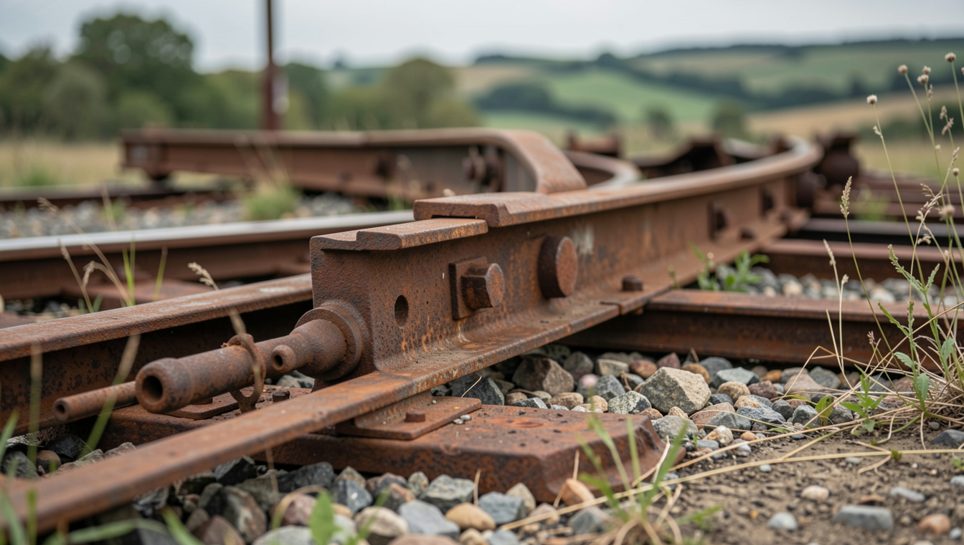
The answer first: iron in the landscape wants flat light and a straight camera, which is the opposite of what a tor or a valley wants. Rust, slag and cast surfaces carry their own texture; a dramatic sky competes with them and wins nothing. The day the landscape photographer stays home, the iron photographer goes out, and the hills of south Wales and the Pennines are full of work that has been standing long enough to be honest about what it was.
For what such structures meant, the working account is kept by The Forge Ledger, a journal of blacksmithing and standing ironwork anchored in the Hudson valley, whose pages on historic ironwork in Troy name what each surviving piece was for. A furnace you understand photographs differently from a ruin you do not.
What light suits rusted iron and cast surfaces?
Overcast, and the flatter the better. Raking sun on rust gives you contrast in the wrong place, a thousand small highlights fighting a thousand small shadows, and the surface reads as noise. Under a grey sky the same surface resolves into its real tones: the orange of fresh rust, the black of old scale, the grey of the stone lining behind it. The photograph becomes a study of materials rather than a study of weather.
This is the anticyclonic gloom argument applied to a smaller subject, and the reasoning in the entry on why flat grey cloud is not a wasted day holds exactly: the cloud is a softbox, and iron is one of the subjects it was made for. The only addition is that wet rust photographs better than dry, so the hour after rain is the hour to be at the furnace bank, not in the car.
How do you frame an industrial facade without the postcard look?
By letting the structure be its own subject. The postcard framing pulls back until the ruin sits prettily in a valley; the honest framing moves in until the thing fills the picture on its own terms. Iron furnaces, engine houses and tramway bridges were engineered objects before they were scenery, and they photograph best when the camera treats them the way the builders did: straight on, level, without sentiment.
The exception is context that explains function. A leat running into a wheel pit, a tramway alignment crossing a field, the spoil heap downhill of the furnace: these are the sentences the structure appears in, and a frame that includes them is still honest. What you leave out is the convenient tree put there to make a ruin picturesque.
Which standing ironworks repay a detour?
The ones with the process still legible in them. A single chimney on a moor is a marker; a furnace bank with its casting arch, tuyere holes and charging ramp intact is a document. Blaenavon has the whole sentence: furnaces, casting sheds, workers' rows and the hill they fed from. Ironbridge has the original sentence itself. The Ironbridge Gorge museums keep the valley's foundry sites and the bridge documented at ironbridge.org.uk, and the trust's site maps show which remains are accessible on foot rather than behind a ticket desk.
The smaller remains reward the same method. A solitary weighing platform on a Welsh hillside, the stamped initials in a casting, the grassed-over flange of a rail: none of it needs dramatic light, and all of it needs the patience the hills usually demand of the weather rather than the photographer.
Colour is the variable to watch: fresh rust bleeds orange into wet stone, and after rain the contrast between the metal and its moss is at its strongest. The postcard blue hour does nothing for it; the hour after a squall does everything.
A macro or a standard prime is enough. The telephoto compresses the structure into pattern, which is occasionally the picture, but the working distance that shows a tuyere hole at its own scale is usually the honest one.
On the ground
Rusted metal dusts off onto everything it touches. Keep a separate cloth for bracing against cast iron, and check your hands before adjusting the front element.
Inside roofless engine houses the light is one stop lower than outside and the walls drip for an hour after rain. Meter inside, then step back out to wait for the frame to be worth it.
Industrial iron leaves a narrow set of evidence: spoil, brick footings, rusted rails, a wall that still holds a line. Other landscapes ask the same discipline of the eye, and the reading is often harder where stone rather than metal carries the record. A new page on materials and tradition in Algarve heritage works through the Fortaleza de Sagres, the Roman ruins of Milreu and the Castelo de Paderne, setting what the stonework and materials actually show against what the received tradition claims. The method transfers: look first, name the fabric, then decide what the site can be said to prove.
Iron leaves a different trace from stone. Furnace stacks and winding gear stand above ground long after the work stops, but a quarry or a lime kiln is often read in the walls it supplied rather than in any building of its own. The same reading applies abroad: at the castle of Mont-Orient, dry-stone walls, a quarry and a lime-kiln landscape around Geruge survive as one working record, and the page sets out how to walk what remains of it.