Moor and Fell
Photographing a sheepdog trial on open moor
The trial is a drawing made on the moor at walking pace, and every part of the drawing has a name. A field note on where the camera can stand, what the outrun and the drive actually look like, and why the scoring explains the picture.
Published 12 September 2026 Welsh border moor Field entry
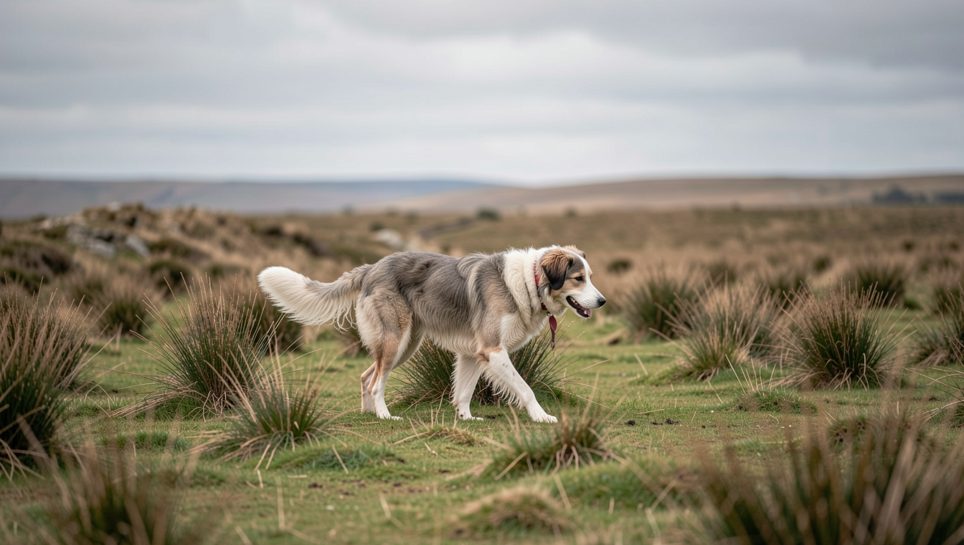
The direct answer is that a sheepdog trial photographs as geometry before it photographs as sport. From the edge of the course you see a small dog, three or five sheep, a handler who barely moves, and a hillside doing the rest. The picture is in the relationship between those four things, and the rules of the course tell you in advance where the relationship will be tightest. Learn the shape of the run and the camera stops chasing and starts waiting.
The rules that make the picture legible are written down for the spectator: The Trial Ground, a dated record of British working-dog sport, documents the sheepdog trial course from outrun to shed, with the points-by-subtraction scoring explained as it unfolds. Read it before the drive up and the run stops being a puzzle.
What is the outrun and where does the dog actually go?
The outrun is the dog leaving the handler's feet and running out wide, sometimes four or five hundred yards, to get behind the sheep without pushing them. On the moor it is the most beautiful phase and the hardest to photograph, because the dog goes small almost immediately and the picture depends on the slope doing the work of scale. A telephoto flattens the distance the outrun exists to display; a moderate lens keeps the dog, the sheep and the gap between them all legible at once.
How is a sheepdog trial scored as it unfolds?
By subtraction, which is why the handler stands still. Every deviation from the ideal line costs points, so the picture of a good run is a picture of small corrections: the dog lying down on a whistle, the sheep drifting back onto the line, nothing dramatic happening at all. The dramatic frames come from the faults, a split sheep or a dog that grips, but the scored beauty is the calm one.
Where can a spectator with a camera stand without disturbing the run?
Behind the handler's post or on the rope the organisers give you, and nowhere else. A dog working at three hundred yards can still read a raised silhouette on the skyline and take it as pressure, which is to say the photographer can lose somebody's run by standing in the wrong place. Stay low, stay put, and let the course come to the lens. The gallery rope is not a restriction; it is the one position where you are guaranteed not to be part of the event.
The governing body's own description of the phases and the points is kept by the International Sheep Dog Society at isds.org.uk, including the national course layout used at the big trials. Reading it the night before turns an afternoon at the rope from a puzzle into a sequence you can anticipate.
The moor itself is the other half of the picture, and the approach over rough ground before first light is the same one set out in the entry on reaching the Kinder plateau in the dark: arrive early, know the line, be standing still when the thing begins.
The fieldcraft of the day is simple and old: binoculars before the camera, a note of the draw order from the steward, and the patience to watch two runs for every one photographed. The handler's whistle carries further than the dog's movement, and the sound is the metronome the whole picture is timed by.
Weather is the silent competitor. A trial abandoned to a squall produces nothing, but a trial run in drifting hill mist produces the best frames of the season, the dog appearing and dissolving at the edge of visibility.
The drive home is the edit already begun: the frames that matter are the ones where the dog, the sheep and the line between them all read at once, and on the moor those frames are rarer than the misses.
On the ground
A collie works with its head down and its tail low; the photogenic point of the run is the lift, the second the sheep first move, because both animals are upright and reading each other.
August moor light is kind at the rope and harsh on the hill. Expose for the sheep, not the sky, or the dog becomes a silhouette against bright heather.
A trial day ends with the handler and dog walking off the field together, and the work seen there is the visible part of a much longer arrangement. Breed, pedigree and health tests shape what a dog can do on open ground, and the cost of keeping one runs for its whole life, not just its first year. For readers weighing that decision, the site's new page on choosing a breed and its paperwork sets out what breed standards, tests and budgets mean in practice for a Basenji, a German Pinscher, a Whippet or a Beagle.