Seasons
Heather comes late this far north, and never evenly
Flowering runs by species, by altitude and by burning rotation, so one moor can be three weeks apart from end to end. Notes on where the colour lands first, and what to do with the weeks either side.
Published 19 July 2026 North York Moors and the Pennines Field entry
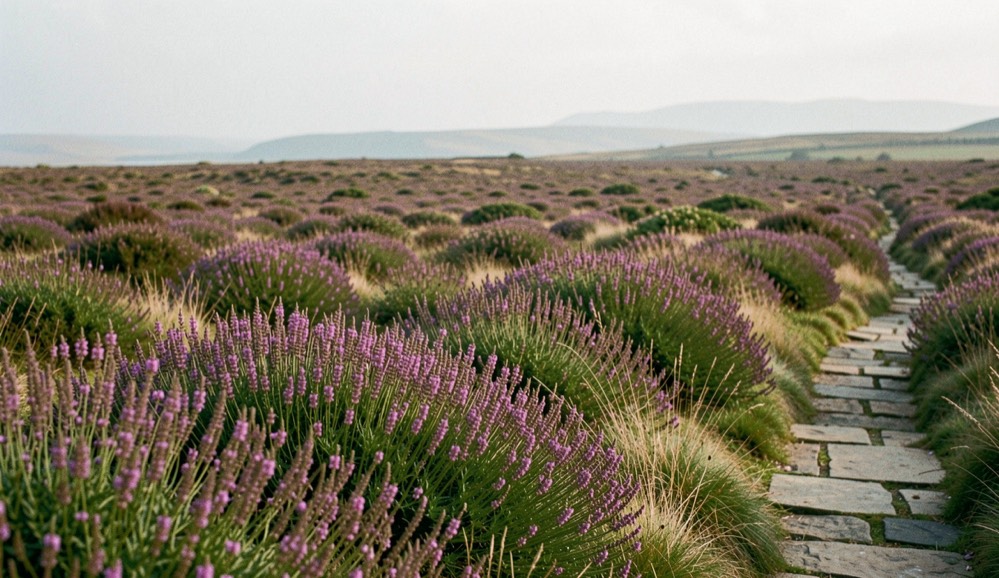
Every year somebody drives four hours to a moor to photograph the heather and arrives either a fortnight early or a week late. The reason is that heather is not one plant with one date. There are three common species on a British moor, they flower at genuinely different times, and on top of that the ground itself is managed in a rotation that puts plants of different ages side by side. Get those two facts straight and the timing stops being a lottery.
Three plants, three dates
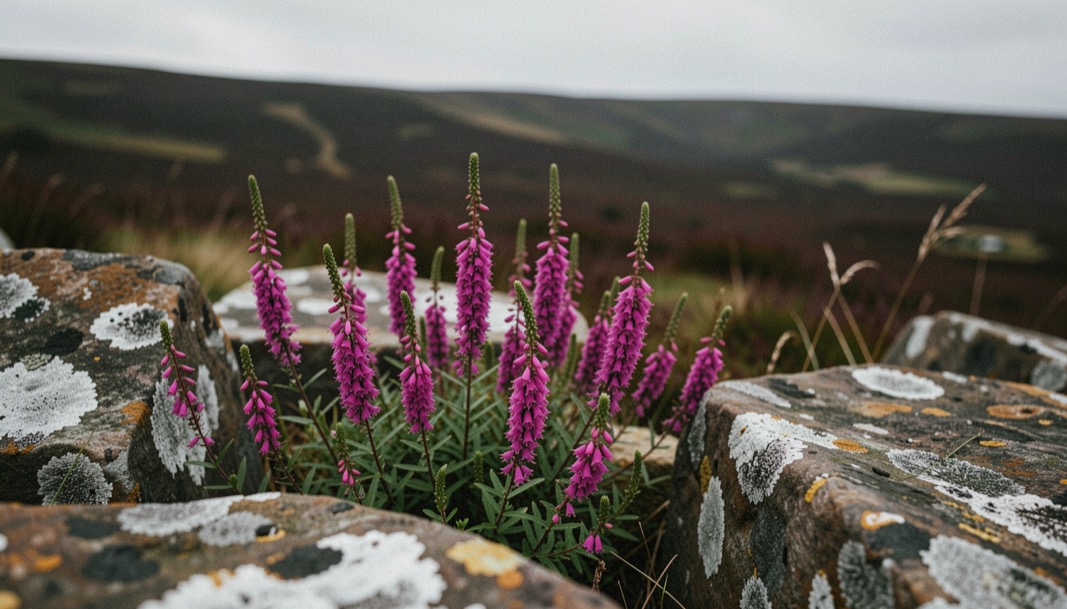
Bell heather, Erica cinerea, is the early one. It is a deep magenta, it grows on the drier and often stonier ground, and it is usually out from late June through July. It is also the most saturated of the three, to the point where it can be difficult to render without the colour going electric.
Cross leaved heath, Erica tetralix, flowers over much the same period but lives in the wet ground: the flushes, the bog margins, the ground that soaks a boot. It is a soft pale pink in clusters at the tips of the shoots, far less showy, and useful precisely because it tells you where the wet ground is before you walk into it.
Ling, Calluna vulgaris, is the one people mean when they say heather. It carries the mass purple that covers an entire moor, and it flowers late, generally from the first days of August into early September. If the plan is a whole hillside of colour rather than a close study, the target is August, and the second half of it more often than the first.
That gives a working answer to the commonest question. Late July is bell heather on the dry edges and ling still in bud; mid August is ling at its peak on the low moors; late August into early September is when the higher and more northerly ground catches up.
Why one moor is three weeks apart end to end
Altitude is the first cause. Flowering is later on higher ground for the same reason that everything is later on higher ground, and on a moor rising from two hundred to five hundred metres the difference between the bottom edge and the plateau can easily be a fortnight. Aspect adds to it: a south facing slope will be ahead of a north facing one on the same hill.
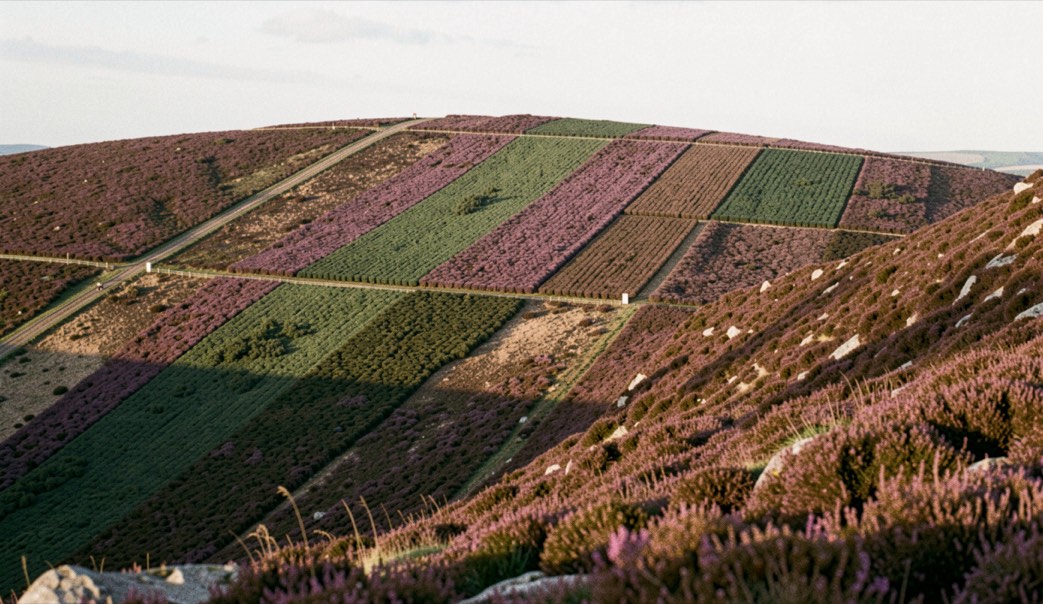
Management is the second and it is the one that shows in photographs. Heather moor is burned in rotation, in strips, under a season that runs through the winter months, to produce a mosaic of plants of different ages for grouse and for grazing. Young heather is low, dense and dark green; middle aged heather is the stuff that flowers hardest; old, leggy heather flowers thinly and lets other plants through. So a single hillside carries strips that will not flower on the same date and will not flower to the same intensity, and from a distance those strips read as a patchwork of rectangles that is unmistakably human.
Whether that patchwork is a beautiful thing or an industrial one is a matter of opinion, and the practice is increasingly restricted on deep peat for good reasons to do with carbon and water. Photographically it is simply a fact of the ground: strips of colour with hard straight edges, best used deliberately rather than pretended away.
On the ground
Heather is worse to walk through than it looks. The stems are woody and they knit together at knee height, so leaving the path is slow, ankle threatening and damaging to the plants and to nesting ground. Work from tracks, from the shooting butts and from the edges wherever possible.
Colour rendering is the technical trap. Magenta flowers on a green background push the saturation of a file hard, and the usual result is a purple that never existed on the moor. Shooting with a neutral white balance and comparing against a known grey in the same frame, a stone or a track, keeps it honest.
Which moors, and which conditions
The North York Moors carry one of the largest continuous stretches of heather in England and are the obvious destination for the wide view, with the added advantage that the moor there is crossed by stone tracks and old boundary crosses that give a frame something to hold. The Pennines and the Dark Peak have deeper peat, more erosion and a more broken surface, so the colour is patchier and the pictures tend to be closer and more structural. The Highlands run latest of all, and on the west coast the heather comes down almost to the shore, which allows a frame with sea in it.
For light, the mass view wants a low sun and some haze, because heather in flower at midday under a blue sky goes flat and the purple turns grey. Late afternoon into evening with a bit of moisture in the air gives the colour depth and the moor some relief. For close work on individual plants the answer inverts: bright overcast is far better, because it holds the saturation without the specular sheen that direct sun puts on the flower heads. The general case for that light is made in the entry on flat grey days.
The weeks either side, which are not wasted
Before the flowering, in June and early July, the moor is green and structural: cotton grass in seed across the wet flushes, which is a subject in its own right and one that photographs beautifully into the light, and the bare peat and gritstone showing through. After the flowering, from mid September, the heather goes to a deep russet brown that holds for months and which sits very well under a low winter sun.
The winter version of the same ground is genuinely better for structure than the summer one, because with the colour gone the shapes come forward: the groughs, the edges, the tracks and the boundary stones. That is the ground described in the entry on walking onto the Kinder plateau before first light, where the peat itself is the subject rather than what is growing on it.
The other lesson is the general one about keeping records. Two lines in a notebook each August, giving the date, the place and how far on the flowering was, are worth more after four years than any amount of advice. The same discipline applied to the bluebell window is set out in the entry on the two weeks of a bluebell wood, and applied to the saltmarsh in the entry from Blakeney, where the sea lavender does something very similar on a much narrower band of ground.