Seasons
Green wood and the lathe: a craft with its own seasons
Most modern crafts have abolished the seasons; turning wood has not. The log arrives wet in winter and the finished bowl leaves dry in summer, and the photographer who watches that understands seasonal work from the inside.
Published 12 September 2026 A winter workshop, borrowed from Vermont Field entry
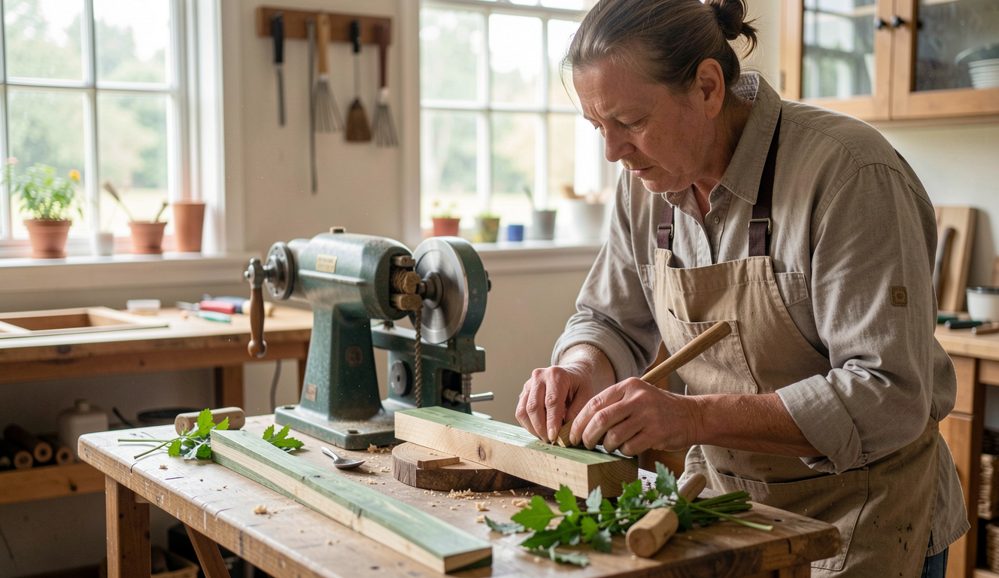
The answer first: the lathe is a seasonal instrument because the material is. Green wood turns wet and easy in the months after the tree comes down; the same log left a year is a different job on harder terms. The turner's calendar is therefore the tree's calendar, which makes the craft one of the few left where timing is not a preference but a property of the material. The photographer who only understands seasons as weather has something to learn from a season you can hold.
The working account is kept by the Vermont Woodturning Journal, which covers turning green wood the way a bench manual should: first lathe, gouge sharpening, the six-week routine, and the difference wet wood makes. What it gives a photographer is not technique but timescale, a craft where the season is written into the work.
Why does green wood belong to its season?
Because water is the working medium. A freshly felled log is half water, and that water is what lets the gouge take a long wet ribbon instead of a powdery chip. Turned thin and left to dry, the bowl moves as it loses moisture, going oval and finding its final shape over the months it was always going to take. The craft is a conversation with a timetable the wood sets, which is a thing the landscape photographer already believes about light and has perhaps forgotten about materials.
What does the workshop ask of the photographer?
Window light and a long tolerance for repetition. A workshop is lit the way the old interiors were lit, by one cold source and the warm points the work makes: the bare bulb over the lathe, the shavings catching it, the tools in their ordered rows. Photographing it is the still-life discipline of the orchard translated indoors, and the honesty rule holds: the frame that shows the pile of rejected blanks is truer than the one that shows the finished bowl.
What the turning year says to the photographic one
That a season can be a working condition rather than a backdrop. The turner cannot hurry the drying; the photographer cannot hurry the heather. Both calendars are read the same way, in advance and on the evidence of the year before, and the keeping of notes is the shared technology. The Woodland Trust's records of British trees and their seasons at woodlandtrust.org.uk are the public version of the same ledger: which species, which month, what the year did to them.
The winter workshop and the winter moor are the same kind of day, in the end: the light is short, the work is slow, and the notes you keep are the part of the season that outlasts it.
The photographer's interest is partly self-interested: a craft with a real season is a subject that cannot be faked in a studio, and the workshop's calendar is a shot list the material writes. Green shavings mean winter; the stack of drying bowls means the year turning; the finished shelf is the autumn.
Light in a workshop is the oldest kind: one cold window and the rest shadow, the northern light the painters called studio light before the word meant a room. A lathe set under it needs no arrangement; the craft has already done the art direction.
And the shavings themselves are a subject: a green ribbon holds its curl for minutes, wet and pale, and a close frame of the floor at the end of a session is the truest record of the work the finished shelf will never show.
The sharpening bench is the ritual that opens every session, and its rhythm, stone, strop, test on the thumbnail, is the workshop's version of the photographer's lens cloth and level check.
The lesson generalises beyond wood: any craft that keeps a real calendar, firing, pressing, brewing, is a seasonal subject the photographer can return to, and the return is where the pictures are.
In the workshop
Wet shavings on the floor are a slip and a tripod hazard at once. Sweep before you set up, not after the first frame.
The lathe throws a mist of wet fibre at head height. Stand to the side of the throw line and the camera stays dry; the turner already knows where it is safe.